Scuba Diving in Aruba: A Complete Guide to the Best Dive Sites
Aruba sits outside the hurricane belt which means calm, clear water and excellent visibility year round. I spent three days diving here with my friend Christian through Palm Beach Divers and came away with six dives across some of the most unique sites I have ever seen. Sunken airplanes, massive shipwrecks, sea turtles, a stingray, an octopus and some of the most accessible reef diving in the Caribbean.
Whether you are a beginner looking for your first open water experience or an experienced diver wanting something genuinely unique, Aruba delivers. Here is everything you need to know about diving in Aruba including the best sites, what to expect from each one, and how to plan your trip.
Palm Beach Divers: The Operator We Used
We booked all six of our dives through Palm Beach Divers and I would recommend them without hesitation. The total cost was $390 for three days of diving with two dives per day and all gear included. For six dives with full equipment that is genuinely excellent value, especially in a Caribbean destination.
What stood out about Palm Beach Divers beyond the price was how organized and attentive the whole operation was. On day one they helped us get all our gear sorted and fitted before we even got on the boat. Between the first and second dive each day they provided snacks on the boat which is a small thing that makes a long day on the water significantly more enjoyable. The guides underwater were excellent at pointing out marine life we would have missed on our own, including a well hidden octopus that completely blended into the reef.
You can find more information and book directly at palmbeachdiversaruba.com. If you are planning a diving trip to Aruba this is the operator I would send my friends to.
What Camera Gear to Bring for Underwater Photography
I shot all of my underwater footage on the DJI Osmo Action 5 with the DJI underwater housing and it performed brilliantly. The housing is purpose built for the camera so the fit is secure and the controls are fully accessible even with gloves on. The Osmo Action 5 handles the blue and green color cast of underwater environments well and the stabilization keeps footage smooth even when currents push you around.
If you are planning to film or photograph underwater in Aruba I would highly recommend picking up the DJI Osmo Action 5 and the official DJI underwater housing before your trip. The combination is compact enough to carry easily on the boat and the footage quality is genuinely impressive for the size.
Day 1: The Airplane Dive — Aruba's Most Unique Experience
The airplane dive was my favorite of the entire trip and one of the most surreal experiences I have had underwater. Two actual aircraft sit on the ocean floor off Aruba's coast. The Convair 340 was damaged by hurricanes over the years and is now broken apart, while the Air Aruba YS-11 remains largely intact with its nose pointed upward in a takeoff position at around 52 feet. The cockpit sits at 52ft / 16m with the tail end reaching down to 90ft / 27m.
Swimming through an actual airplane on the ocean floor is something that is genuinely hard to describe until you experience it. The marine life here is not the highlight since the planes are relatively new as dive sites and have not yet developed the rich reef ecosystems of older wrecks. But seeing those aircraft sitting silently on the sand is unlike anything else I have seen diving. This is the dive I would tell anyone visiting Aruba to prioritize above everything else.
Day 2: Blue Reef, Debbie II and the Pedernales Wreck
The Blue Reef and Debbie II dive sits at 70ft / 21m and combines a colorful reef with a sunken fuel barge that was deliberately sunk in 1992 as an artificial reef. The reef itself features giant barrel sponges in purple, orange and green alongside lobsters, eels and stingrays. I spotted an eel and a stingray on this dive. Compared to the airplane dive the day before it felt like a step down in terms of pure wow factor, but the reef life and the sponge formations were genuinely impressive.
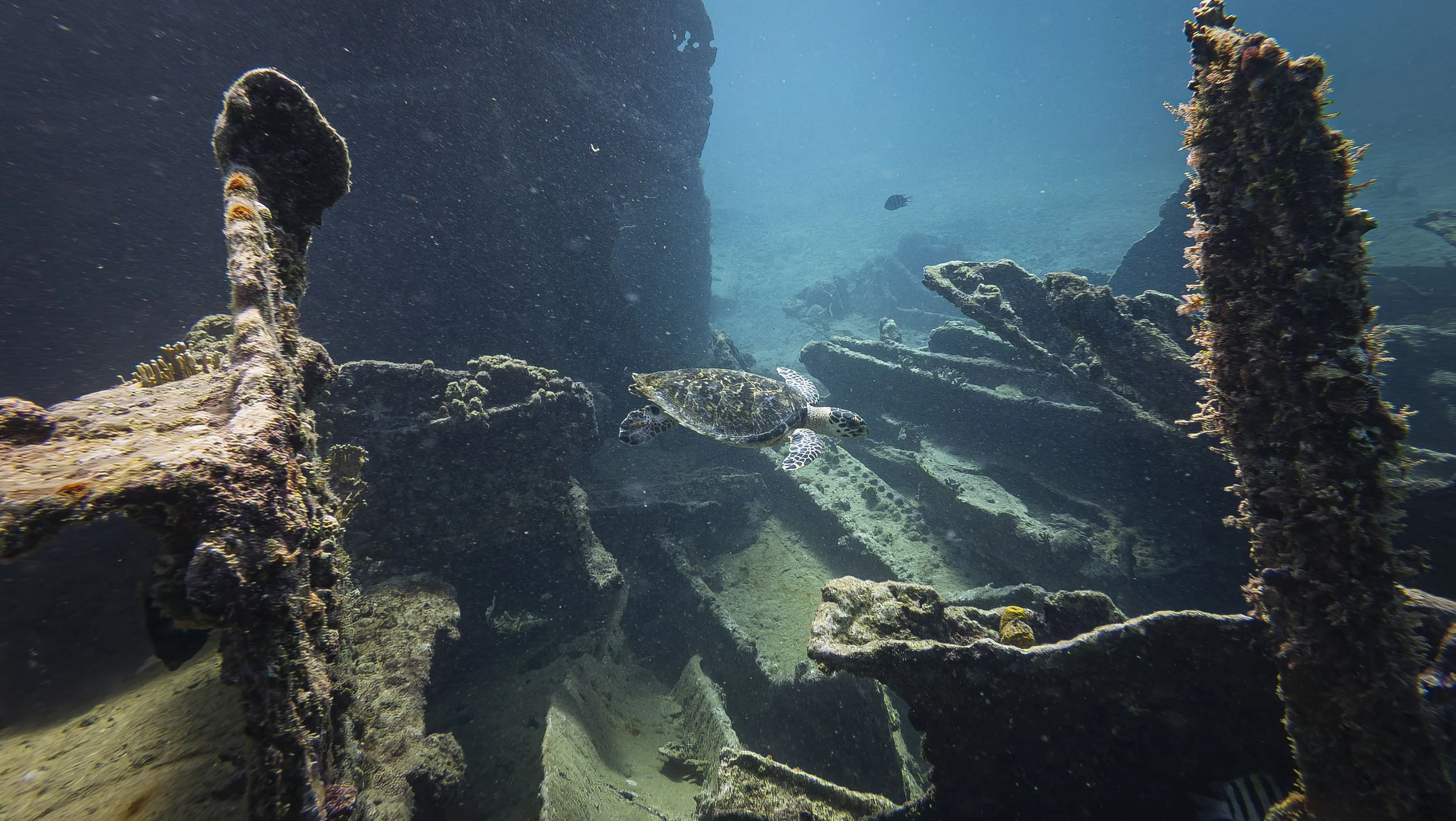
The second dive of the day was the Pedernales, a WWII oil tanker torpedoed by a German submarine in 1942 at just 25ft / 8m deep. The wreck is scattered across the reef floor with sections of cabin, wash basins, lavatories and the pipeline system all visible as you swim through. The shallow depth makes this extremely beginner friendly and the WWII history gives it a compelling backstory beyond just the marine life.
We saw turtles on this dive which was a highlight. The combination of historical wreck and accessible reef makes Pedernales one of the more underrated sites in Aruba.
Day 3: The Antilla Wreck and Arashi Reef
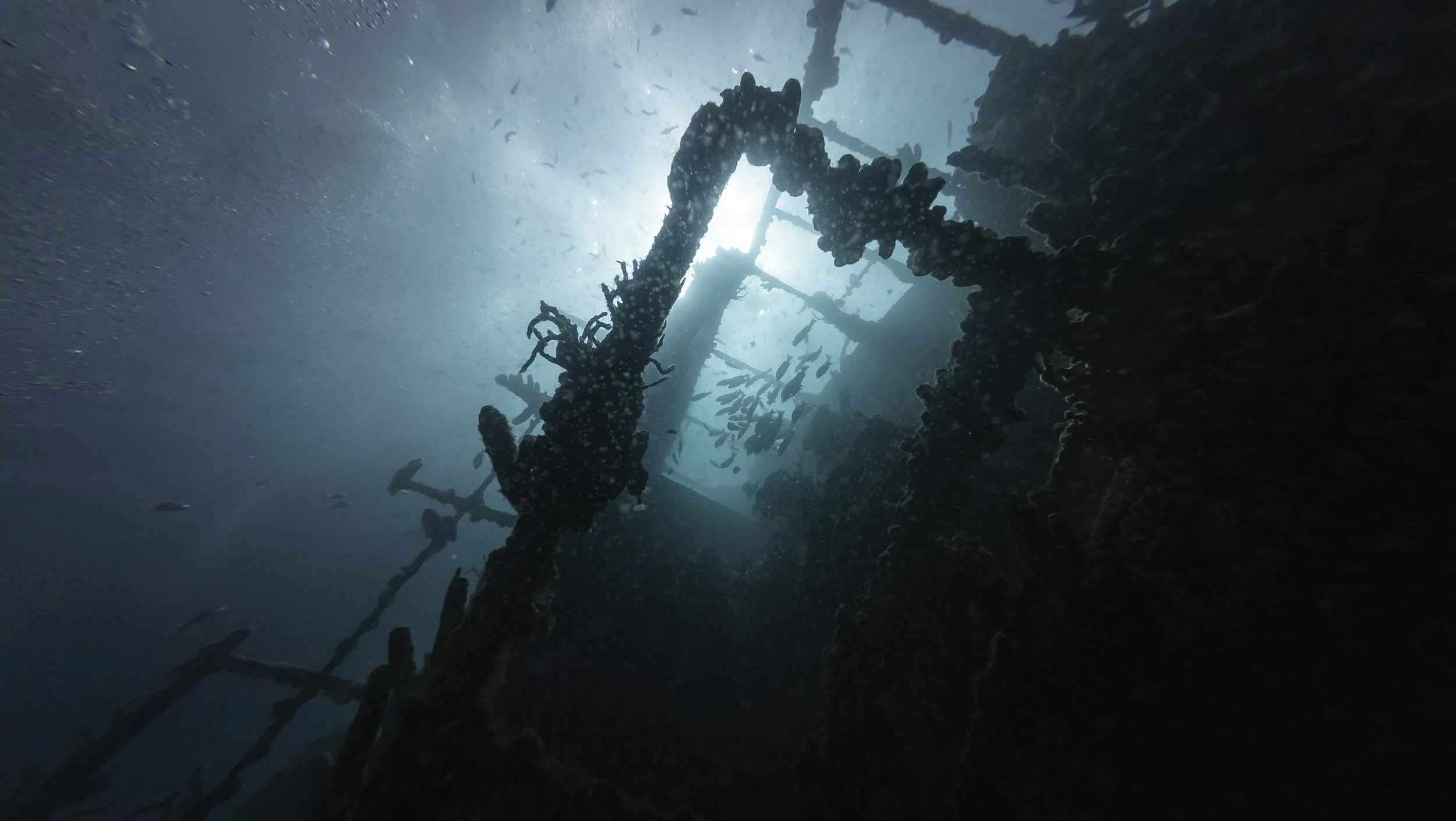
The Antilla Wreck is the largest shipwreck in the Caribbean at 400 feet long and it is as impressive as that description suggests. This German freighter was scuttled on May 10th 1940 by its own crew to prevent it from being seized by the Dutch government during WWII. Diving at 55ft / 17m you can swim through the large cargo compartments which are now covered in coral and surrounded by schools of tropical fish.
This was my first experience diving a large shipwreck and the scale is hard to comprehend underwater. The compartments are large enough that you can swim through them comfortably even as a beginner and the coral growth covering the entire structure makes the whole thing feel alive rather than like a sunken ghost ship. The marine life here is significantly richer than the airplane sites because the Antilla has been on the ocean floor for over 80 years.
Arashi Reef at 40ft / 12m was the perfect final dive of the trip. Known locally as the home of the turtles, this reef delivered on that reputation immediately. We saw multiple turtles, a stingray and an octopus on a single dive which made it the best marine life experience of the entire three days. The reef also has scattered pieces of a wrecked Lockheed Lodestar plane adding an interesting discovery element as you explore.
If you are only doing one reef dive in Aruba make it Arashi. The combination of turtle encounters, diverse fish life and the hidden plane wreck pieces makes it the most rewarding reef experience on the island.
Is Aruba Good for Scuba Diving?
Aruba is one of the most beginner friendly dive destinations in the Caribbean. The calm conditions, excellent visibility and variety of shallow sites make it ideal for newer divers. But there is more than enough to keep experienced divers engaged between the airplane wrecks, the massive Antilla shipwreck and the diverse reef ecosystems.