Lupine Season in Crested Butte: Best Hikes and Photography Tips
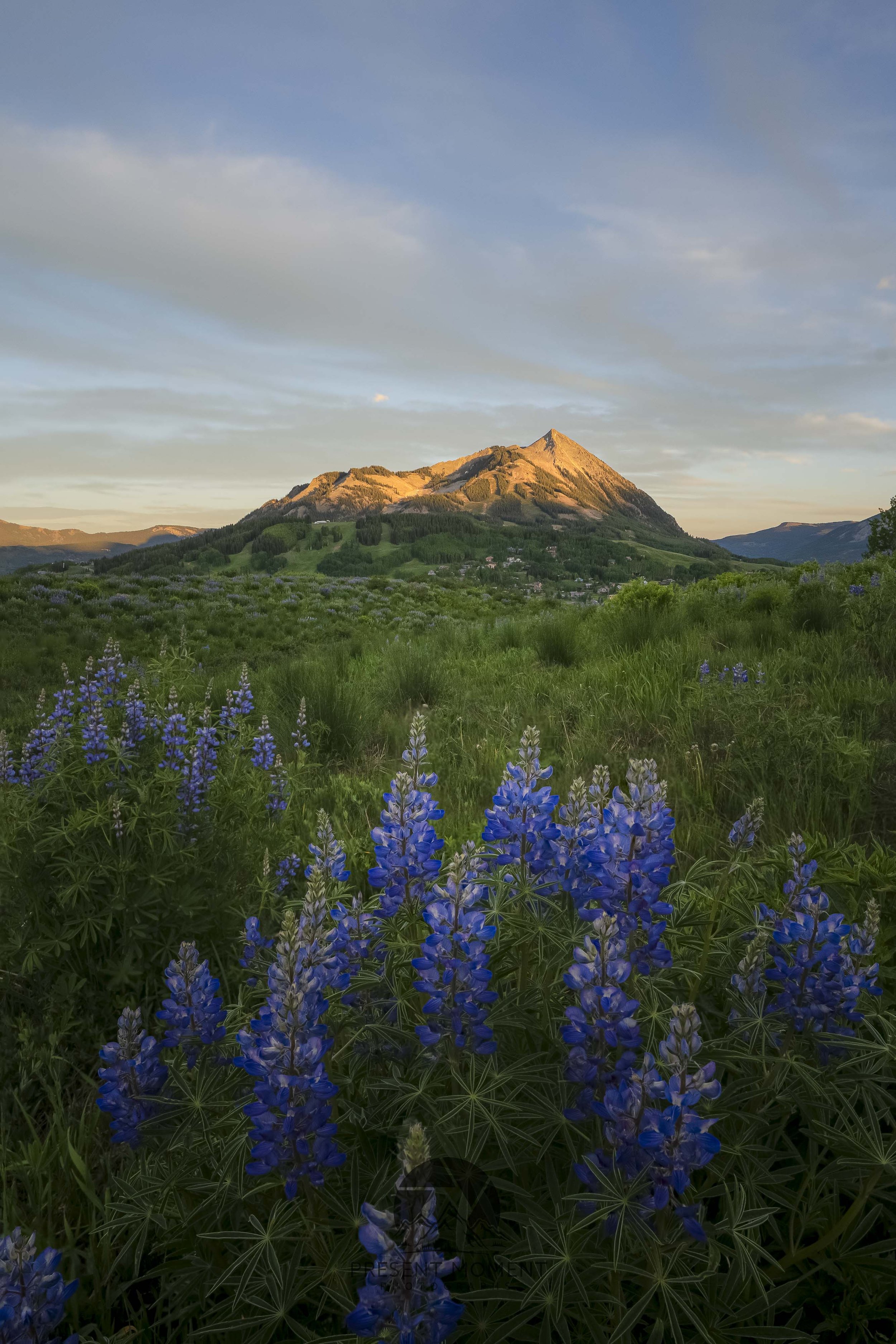
I just returned from Crested Butte in mid June specifically to catch the lupines before the main wildflower season kicked in. I had been before during peak bloom in July but wanted to experience the purple fields before the crowds arrived. It did not disappoint.
Lupine is one of the first type of wildflowers to bloom in Crested Butte and if you time it right the hillsides turn a deep purple that is honestly hard to believe. This post covers when to go specifically for lupine, the best trails to find them, and how I approach photographing them once I am out there.
When is Peak Lupine Season in Crested Butte?
The Lupine flower is an early bloomer compared to most other wildflowers in the valley. At lower elevations around town and along the main trails you can start seeing it in mid to late June depending on the years snowpack. Usually peak bloom is around the last week of June. By the time the full wildflower season is in full swing in late July a lot of the lupine at lower elevations fade.
This year the season started early due to a low snowpack year. Lower and mid elevation trails were running about one to two weeks ahead of a normal year. If you are planning a trip check current conditions at travelcrestedbutte.com before you go since they update trail conditions daily through the season. It is a great and reliable resource that shows timing and photos of various wildflower conditions in Crested Butte.
Best Trails to See Lupine in Crested Butte
Snodgrass Trail
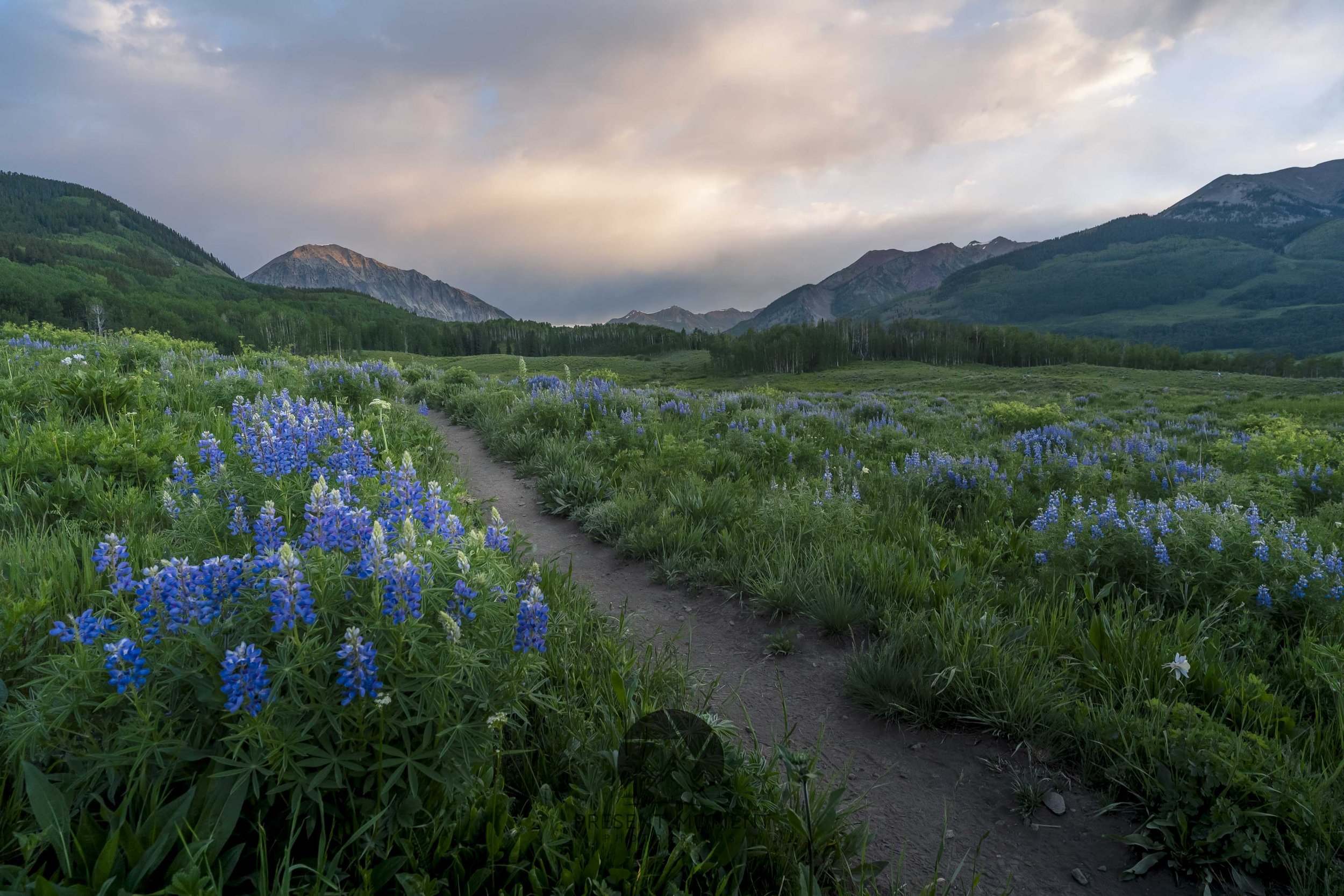
Snodgrass trail is probably my favorite trail in Crested Butte overall and during lupine season it is incredible. The meadows open up early on the trail with sweeping views of Mount Crested Butte and the surrounding Elk Mountains. The lupine lines both sides of the trail for long stretches and you do not have to hike far before you are completely surrounded by lupine flowers. The best views actually come before you reach the top so do not feel like you need to summit to get the full experience. I hike only about a mile up and was surrounded. This is one of my favorite places to hike for sunset because of the amazing light that bounces off Mt. Crested Butte.
Teddy's Trail
Teddy’s Trail is a smaller trail that is off of Snodgrass trail and it is one of the best bang for your buck hikes in the area during peak lupine season. The payoff comes fast and the views are spectacular. If you are short on time or want something less demanding than the full Snodgrass loop this is the hike to do. It is best in mid July for the full display but worth visiting in late June for the early lupine as well.
Deer Creek Trail
Deer Creek trail is a lot less trafficked than Snodgrass which is a big appeal. I scouted this trail on my most recent trip and found some great compositions with lupine in the foreground and Gothic Mountain as the backdrop. It is a trail worth exploring if you want to get away from the more popular areas and find something a little more secluded.
Lupine Trail
The lupine trail is named for obvious reasons. The hillsides along this trail have the most concentrated lupine display in the valley. The first three quarters of a mile from the trailhead is the sweet spot with open views of the Slate River Valley and dense purple blooms on both sides. This trail is best in late June through early July specifically for lupine before other species take over. Sunset light on the east-facing hillside is particularly good.
How to Photograph Lupine in Crested Butte
I have shot wildflowers a lot over the years and they are honestly one of the trickier subjects in landscape photography. They are small, they blow around in the wind, and getting the compositions I want usually means getting super close which creates all kinds of depth of field challenges.
Use flowers as foreground interest
My favorite approach is getting as low as I possibly can and using the lupine as a foreground element with the mountains behind. I use a wide angle lens and get the flowers filling the bottom third of the frame while the peaks stretch into the background. The depth and scale you get from that low perspective is what separates an interesting wildflower photo from just a picture of some flowers.
Focus stacking for close-up shots
The closer you get to individual flowers the more you run into depth of field problems. Even at f/11 or f/16 I cannot get the whole flower sharp while keeping a the background in focus. Focus stacking is how I solve it. I take multiple shots with the focus point shifted slightly through the flowers and background then blend them together in Photoshop or Lightroom. The editing takes a while but the results are genuinely worth it.
Shutter speed and wind
Wind is the thing that ruins more wildflower shots than anything else. Even a light breeze will blur lupine at slower shutter speeds and there is nothing you can do about it in post. I keep my shutter at 1/250th minimum whenever I see any movement in the flowers. In bright light that is easy but on overcast days I will push my ISO higher to compensate. A slightly noisier sharp image beats a clean blurry one every time.
Bracketing exposures
The dynamic range between a bright sky and shaded flowers in the foreground can be brutal especially around golden hour. I bracket my exposures whenever the contrast looks challenging, usually three shots at different exposures then blend them in Lightroom or Photoshop. It adds editing time but saves shots that would otherwise be blown out in the sky or too dark in the flowers.
Try a telephoto for abstract shots
Most wildflower photography leans on wide angle but a telephoto lens opens up a completely different set of images. Compressing a dense field of lupine from a distance creates an abstract wash of purple that can be really striking. I look for patterns or places where the flowers create a solid carpet then isolate just that section with the telephoto. Worth experimenting with if you have one in your bag.
Shoot golden hour
Lupine at midday looks flat and a little washed out. The same flowers at sunset with warm light raking across the meadow are a completely different subject. I plan every shoot around the light first and the location second. The hour before sunset on Snodgrass is some of the best wildflower light I have found anywhere in Colorado. Get there early to find your composition then just wait for the light to do its thing.
Lupine Season vs Peak Wildflower Season: Which Should You Visit?
This is a question I get a lot and the honest answer is it depends on what you are after. Lupine season in late June gives you the most intense purple displays with fewer crowds and more manageable parking. The tradeoff is that other species like Indian paintbrush, columbine and sneezeweed are not yet at their peak so the variety is more limited.
Peak wildflower season in mid July gives you the full kaleidoscope of color with multiple species blooming at once. The meadows look genuinely unreal. The downside is the crowds and the Wildflower Festival happening July 10 to 19, 2026 means the town and trails will be busy.
For photography specifically I actually prefer lupine season. The more singular color palette of the purple fields is easier to work with compositionally and the lower crowds mean I can take my time finding and shooting without people walking through my frame. But you really cannot go wrong with either.
Final Thoughts
Crested Butte during lupine season is one of those places that genuinely exceeds expectations every time I visit. I have been a lot of times now and the purple fields still stop me in my tracks. If you are planning a Colorado summer trip and have not been during lupine season specifically, put it on your list!